
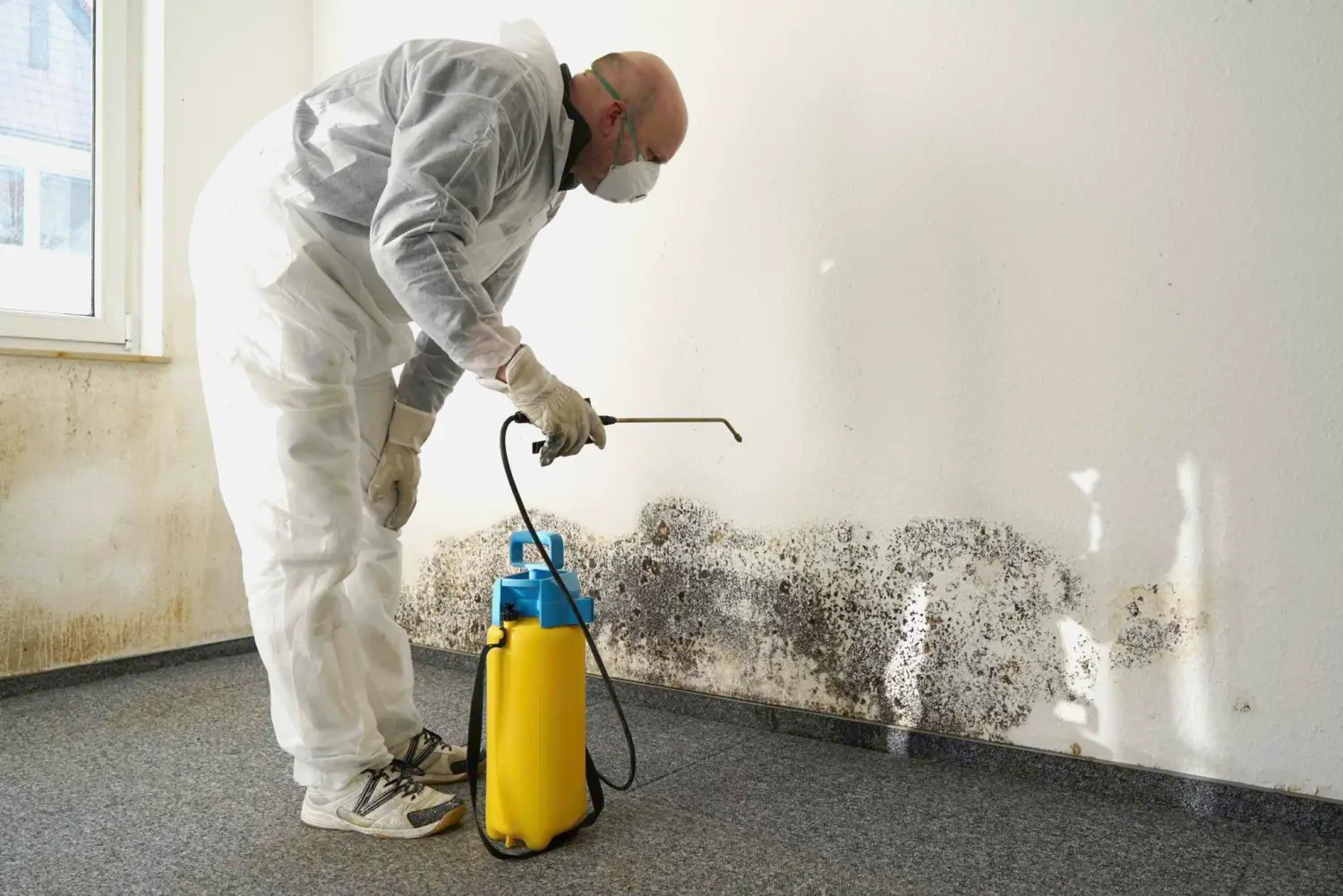
Found black mold in your home and not sure what to do next? That uncertainty is completely understandable—but it’s also the kind of hesitation that lets mold spread further while you figure out your next move. The answer is not always ‘call a professional immediately,’ and it is not always ‘grab some bleach and scrub.’ It depends on how much mold you have, where it’s growing, and what caused it in the first place. This guide walks Golden and Thornton homeowners through a clear decision framework: how to safely remove small patches of black mold yourself, when the scope demands a certified remediation team, and what you can do right now to stop it from spreading while you figure out your next step.
Jump To A Section
- What Is Black Mold and Why Is It Dangerous?
- How to Identify Black Mold in Your Home
- Safety First: What You Need Before You Touch It
- How to Get Rid of Black Mold: DIY Removal for Small Areas
- When to Call a Professional for Mold Remediation
- What to Expect from Professional Mold Remediation
- How to Prevent Black Mold from Coming Back
- Frequently Asked Questions About Black Mold
What Is Black Mold and Why Is It Dangerous?
Black mold, most commonly identified as Stachybotrys chartarum, is a dark green or black fungal growth that thrives in areas with persistent moisture, poor ventilation, and organic building materials like drywall, wood framing, and ceiling tiles. It reproduces by releasing microscopic spores into the air—spreading through a structure, and entering resident respiratory systems.
Exposure to black mold is dangerous because it’s linked to chronic coughing, nasal congestion, eye irritation, skin rashes, and persistent fatigue. Sensitive individuals may be more prone to serious respiratory conditions post-exposure.
In Golden and Thornton, CO specifically, the combination of cold winters, snowmelt cycles, and older housing stock creates conditions where moisture intrusion and mold growth are more common than many homeowners expect. Basements, crawl spaces, and exterior walls are the highest-risk zones. Regardless of location, however, the EPA is clear that any visible mold growth in a home warrants attention regardless of species—which means waiting to confirm the exact type before acting is not a strategy that works in your favor.
Black mold thrives in moisture-prone areas and spreads through airborne spores that cause respiratory irritation, fatigue, and other health effects. Any visible mold growth should be addressed promptly—waiting to confirm the exact species before acting allows it to spread further and increases remediation costs.
How to Identify Black Mold in Your Home
Black mold doesn’t always look the way people expect. It often begins as small specks in a damp corner and spreads gradually into larger colonies. Since it frequently grows in hidden or low-traffic areas, many homeowners do not find it until it has been present for weeks or months.
Common signs of black mold in the house include:
- Dark greenish-black patches or clusters of spots on walls, ceilings, grout lines, or around window frames
- A persistent musty or earthy odor in a room, even when surfaces appear clean and dry
- Visible water staining, discoloration, or bubbling paint on drywall or wood surfaces
- Soft, spongy, or warped areas on walls or floors where moisture has saturated the material
- Respiratory symptoms or allergy-like reactions that improve noticeably when you leave the house
The highest-risk locations in a typical home are bathrooms, basements, crawl spaces, under sinks, around water heaters, near HVAC equipment, and anywhere a past leak or flood occurred—but mold can be anywhere in the home. If your Golden or Thornton home has experienced any water damage—even a minor one that appeared to dry on its own—those areas deserve a close inspection.
Look for dark patches, musty odors, water staining, and soft or warped surfaces. High-risk zones include basements, crawl spaces, and any area that has experienced past water intrusion. Health symptoms that improve away from home are also a strong indicator that mold may be present.
Safety First: What You Need Before You Touch It
Before you attempt any mold removal yourself, personal protective equipment is non-negotiable. Disturbing mold without protection releases a concentrated burst of spores into the air and dramatically increases your exposure and health risks.
Personal protective gear you should have before attempting to get rid of black mold includes:
- An N-95 respirator: This is a basic respirator mask that filters out most common mold spores.
- Safety goggles with no ventilation gaps: These protect your eyes from airborne spores.
- Disposable nitrile gloves: This type of PPE protects your hands. Make sure that you’re not using reusable rubber gloves, as this can spread the mold contamination.
- Old clothing: This helps limit mold spread. You can also invest in a disposable Tyvek coverall you can bag and discard after the job.
Remember: Before starting work, seal off the affected area from the rest of the home using heavy-gauge plastic sheeting. Turn your HVAC system off completely. Running it while disturbing mold pushes spores through the duct system and distributes contamination to every room in the house.
An N-95 respirator, sealed goggles, and nitrile gloves are the minimum protective equipment required before touching mold. Seal off the work area and shut off your HVAC system before beginning — disturbing mold without these precautions in place significantly increases your exposure risk.
How to Get Rid of Black Mold: DIY Removal for Small Areas
DIY mold removal is only appropriate for patches smaller than 10 square feet on non-porous or semi-porous surfaces—like tile, sealed concrete, or bathroom fixtures. If mold is growing on drywall, insulation, carpet, or wood framing, those materials generally need to be removed and replaced rather than cleaned, because mold penetrates deep into porous surfaces where surface cleaning cannot reach. The EPA mold cleanup guide provides clear and specific parameters for when DIY is and is not appropriate.
How to Get Rid of Black Mold on Hard Surfaces:
- Lightly mist the moldy surface with water before scrubbing. This step reduces the number of spores released into the air during the removal process.
- Apply an EPA-registered mold-killing product or a solution of one cup of bleach per gallon of water directly to the affected surface and let it sit for at least 10 minutes, or as long as the product directions direct.
- Scrub the area thoroughly with a stiff-bristled brush, working the solution into any textured areas, grout lines, or surface irregularities.
- Wipe the area clean using disposable rags or paper towels. Seal them in a heavy-duty plastic bag immediately — do not carry them through the house to the trash.
- Allow the surface to dry completely. If discoloration or growth remains, apply a second treatment before considering the area clear.
- Dispose of all materials, including rags, gloves, coveralls, and brushes, in sealed plastic bags placed directly in your outdoor trash.
Avoid getting rid of mold using dry brushing and standard vacuuming techniques. Both scatter spores rather than capturing them. If you use a vacuum, it must have a HEPA filter certified to capture particles at the mold spore size range.
DIY removal recommendations only apply to patches under 10 square feet on non-porous surfaces. Mist the surface first to limit airborne spores, apply an EPA-registered product or bleach solution, scrub thoroughly, and dispose of all materials in sealed bags. Mold on drywall, wood, or insulation requires professional removal. Surface cleaning is not sufficient for porous materials.
When to Call a Professional for Mold Remediation
There are clear situations where DIY is not safe, and not sufficient. Attempting professional-scope mold removal without the right equipment and training typically makes the problem significantly worse.
Call a certified mold remediation service in Thornton if any of the following apply:
- The affected area is larger than 10 square feet
- Mold is present inside walls, under flooring, in ceiling cavities, or in your HVAC system
- The mold has returned after a previous cleaning attempt, indicating a persistent moisture source that has not been resolved
- Anyone in the home is experiencing respiratory symptoms, chronic fatigue, or other health effects potentially linked to mold exposure
- The growth followed a significant water event such as a flood, burst pipe, sewage backup, or roof leak
RestoreCo provides certified mold remediation throughout Golden and Thornton, CO. If your mold is connected to a recent water loss, our team addresses both the water damage restoration and the mold remediation under a single coordinated scope—giving you your most convenient and efficient fix yet.

Professional remediation is required when the affected area exceeds 10 square feet, when mold is inside walls or HVAC systems, when growth recurs after cleaning, or when occupants are experiencing health symptoms. Mold following a water damage event almost always requires professional assessment regardless of the visible size of the growth.
What to Expect from Professional Mold Remediation
Professional mold remediation is a structured, multi-phase process that goes well beyond surface cleaning. Here’s exactly what happens when you book a service, from the first call to final clearance.
Inspection and Moisture Mapping
A certified technician assesses the full extent of mold growth using moisture meters and thermal imaging to locate hidden growth behind walls and under floors. The source of moisture is identified at this stage, since remediation without addressing the moisture source is temporary at best.
Containment Setup
The affected area is sealed under negative air pressure using heavy-gauge plastic sheeting and industrial air scrubbers with HEPA filtration. Negative pressure prevents spores from migrating to unaffected areas of the home during removal work.
Removal and Disposal
Contaminated porous materials—like drywall, insulation, flooring, and framing where necessary—are removed and double-bagged for regulated disposal. Non-porous surfaces are cleaned with EPA-registered antimicrobial agents and documented throughout.
Drying and Antimicrobial Treatment
The underlying moisture problem is resolved and the area is dried to industry standard before any rebuild begins. Antimicrobial coatings are applied to all treated surfaces to inhibit future growth.
Post-Remediation Clearance Testing
Air quality and surface testing is conducted after containment is removed to confirm that mold levels have returned to normal background levels. Clearance testing is the professional standard. Without it, there is no verified confirmation that the remediation was successful.
Professional remediation follows a defined process: moisture mapping, negative-pressure containment, removal of affected materials, drying, antimicrobial treatment, and post-remediation clearance testing. Clearance testing is the critical final step that confirms the job is actually complete — not just visually finished.
How to Prevent Black Mold from Coming Back
Remediation resolves existing growth. Preventing recurrence means permanently correcting the moisture conditions that allowed mold to establish in the first place—because mold spores are always present in the environment and will colonize any surface that stays wet long enough.
- Fix all plumbing leaks promptly, including slow drips under sinks, behind washing machines, and along supply lines to refrigerators and dishwashers.
- Keep indoor relative humidity below 50 percent. Do this by using a dehumidifier in basements and crawl spaces, especially during Colorado’s wetter spring and fall seasons.
- Confirm that bathroom and kitchen exhaust fans vent to the building exterior and not into attic spaces, where moisture then accumulates.
- Inspect your crawl space at least once per year, particularly after a heavy snow season. This is the most commonly overlooked moisture source in Golden and Thornton area homes.
- Address any basement water intrusion immediately rather than allowing it to evaporate on its own. Moisture that cannot be seen is still feeding mold growth.
If your home has a history of crawl space moisture problems or recurring flooding, professional encapsulation is worth the investment. RestoreCo provides flooded crawl space cleanup in Thornton, and mold remediation in Thornton for homeowners dealing with moisture issues that keep coming back. Contact us today to learn more.
Mold prevention is fundamentally moisture control. Fix leaks immediately, keep humidity below 50 percent, ensure exhaust fans vent properly, and inspect crawl spaces annually. In Colorado’s climate, spring snowmelt and temperature swings create seasonal moisture risk that makes annual inspections especially important for Golden and Thornton homeowners.
Frequently Asked Questions About Black Mold
Is all black mold the same?
No. Not every dark-colored mold is Stachybotrys chartarum. Many common mold species appear black, dark green, or dark gray. Mold growth in a home should be addressed regardless of species, as most common household molds cause adverse health effects at sufficient exposure levels, and visual identification is not a reliable way to assess risk.
Can I test for black mold myself?
DIY mold test kits are available at hardware stores but have significant limitations. They can confirm the presence of mold spores in a sample but cannot accurately identify the species, the full extent of colonization, or the moisture source driving growth. A certified industrial hygienist or mold inspector provides results with enough detail to inform a remediation plan.
How long does mold remediation take?
Most residential mold remediation projects take between 1 and 5 days depending on the affected area, the materials involved, and how long drying takes. Larger losses involving multiple rooms or structural materials take longer. A reputable restoration company provides a clear written scope and timeline after the initial assessment—not before.
Does homeowner insurance cover mold remediation?
Coverage depends on the cause. Mold resulting from a sudden covered event—like a burst pipe, storm flooding, or appliance failure—is typically covered under a standard homeowner policy. Mold from long-term neglect, deferred maintenance, or gradual leaks is usually excluded. RestoreCo documents all findings thoroughly and works directly with your adjuster to support your claim.
Can mold come back after professional remediation?
Mold will return if the underlying moisture source is not corrected as part of the remediation scope. Certified remediation eliminates existing growth and treats affected surfaces, but the result is only permanent when the conditions that caused the growth are resolved. That’s why identifying and fixing the moisture source is the first step—not an afterthought.
Learning How To Get Rid of Black Mold is the First Step to a Healthy Home
Dealing with black mold in your Golden or Thornton home? Don’t wait for it to spread further into your walls, your air, and your peace of mind. RestoreCo’s certified remediation team responds fast, contains the problem at the source, and restores your home to safe, mold-free condition.
Call RestoreCo at (303) 868-1568, or contact us online for a convenient mold remediation estimate in Golden or Thornton, CO. We also handle mold remediation in Denver and water and mold damage restoration in Golden and the surrounding areas when water and mold damage occur together.